
What hooks you in a fictional character? Dr. Deadly most often hears that characters who are believable, want something desperately, and show their vulnerabilities will compel us to get attached and to care about what happens to them in the story. But let’s look at another quality that might grab you: when a character “breaks the mold” or non-conforms in authentic ways at pivotal moments.
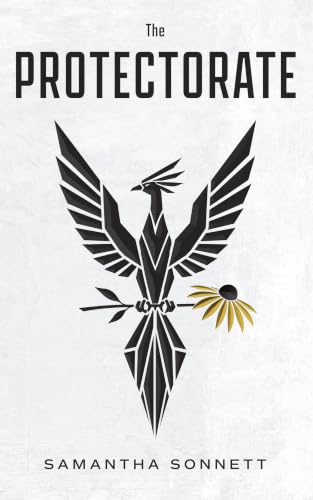
I just finished Samantha Sonnett’s The Protectorate, a recent release and Sonnett’s debut novel. The premise was intriguing: a homicide detective’s hunt for a serial killer leads her to a mysterious war hero and a secret society – The Protectorate – that has a hand in world events.
Reading this novel was like stepping into one of my favorite shows. Or two or three of them…the pairing of a crime drama with espionage was like Line of Duty crossed with the vibe of Homeland or The Americans.
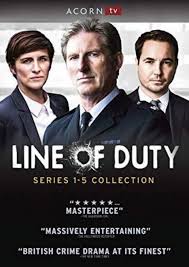


My thought ran on a silent loop the entire time…please, Netflix, pick this up! I mentally auditioned theme songs for the show during reading breaks.
The Protectorate really hooked me as a novel, though, with the unexpected and subtle complexity of the story and some of its characters. One, in particular, provoked thoughts on the power of characters who break away from expected conventions or group norms.

This was a woman on the secret society side. She’s a very principled and meticulous person, with a strong personality and a long history of commitment to the mission and secrecy of The Protectorate.
She takes some unexpected actions, and I liked how Sonnett made this happen while keeping her character believable and internally consistent. While her actions initially seem to contradict her allegiance to the Protectorate, in the end she’s able to honor her loyalty to her personal ethics and to the organization. She breaks the mold of the monolithic identity, and the story is more compelling and suspenseful for it.
How hard do you think that is to do? Consider the famous Asch conformity experiments of the 1950’s, which have been well-replicated. Solomon Asch found that participants gave an obviously wrong answer to a question when other people (actors pretending to be fellow participants) gave that wrong answer first. Take a guess: what percentage of participants do you think gave at least one obviously wrong answer in order to conform to the group?

The answer: about 75%.
Asch found distinct reasons people did this: the two most common were distorted judgment (they recognized the popular answer as wrong, but doubted their own judgment enough to give the popular answer), and distorted action (they were confident their own answer was correct, but weren’t willing to stand apart from the group).
As usual, one size doesn’t fit all, but what a powerful human tendency: three-quarters of people will override their own judgment to go along with the group. (In studies through the 2020’s, the rates have ranged from a little lower to a little higher than 75%, and always significantly above half.) Is that, or isn’t that, understandable?

Crime fiction is…well, fictional…but the more relatable characters are, the more powerful it is. Asch’s findings highlight just how human it is to fall into conformity. Going deep into a character’s emotions around their reasons for conforming can be moving. And portraying a character who doesn’t conform, and their emotions and their reasons, could make an intriguing and memorable read. That was certainly the case for me, in reading The Protectorate.



Leave a comment