

Characters reveal their – well, characters – in novels, and some labels we might use are “good”, “bad”, and the now-popular “morally gray”. Dr. Deadly’s latest read inspired thoughts on a different angle: the potential of a character, which hints at a more fluid identity.
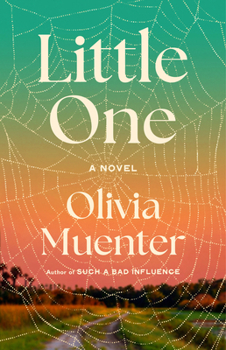
Olivia Muenter’s Little One is told through the voice of Catharine, who grows up in a small cult run by her father, a man with no conscience, a need for total control, and the desire to strip others down to their emotional and physical bones. He is bad.
As for Catharine, she’s kept a low profile since separating from her notorious father. Her relationships are limited. She sticks to a made-up story of her past. And then…a reporter tracks her down.
Atmosphere and tension build as we alternate between past and present. Catharine has secrets. She sometimes relies upon lies and manipulation. There’s an undeniable edge to her, a possible byproduct of the scarcity of love and trust in her upbringing.
An intriguing extra layer forms with references to how Catharine’s personality, from a young age, bears some similarity to her father’s. Catharine presents with her own need for control and the periodic habit – and at times even enjoyment – of manipulating and acting spitefully toward others. But she’s largely a sympathetic character. She’s certainly nowhere near her father’s level of antisocial behavior.
It seems the perfect setup for a slow reveal of Catharine’s true nature. Is she good, is she bad, or is she morally gray, following a code that dips back and forth over the line?
This novel had me thinking about the morally gray space, and how that usually involves a pattern of behavior that ultimately serves some altruistic – or at least not malevolent – purposes. The protagonist who kills the puppy-abuser. Or the one who looks the other way on small-time crime to get information or keep important relationships.

What Muenter gives us in Catharine is something different. It’s not about a clear pattern, and slotting her neatly into a category. The novel portrays something equally realistic about human nature and behavior…that we all may contain multitudes of potential, and there are so many events, factors, and circumstances that play a role in how we’ll evolve through life.
What you will do, and who you are, ten or twenty years from now could be different enough from now that it makes a real difference in your life and the lives of those around you. And what’s more thrilling – and possibly chilling – than that?
This evolution in a fictional character, as opposed to a static state of good, bad, or morally gray, could be a strong driver of both plot and character development. And I mean this in either direction: a character veering just enough toward malevolence, or just enough toward altruism, to move the needle in their world.
Without spoiling Little One’s ending, I will say it hinted at a possible evolution in Catharine’s behavior and morality. I normally feel frustrated with endings that are even slightly ambiguous, but I loved this one. I think it makes for some great book club discussion.



Leave a comment