

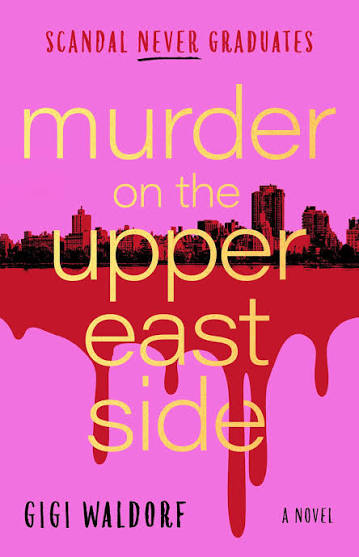
If you ask what fuels a novel, a common answer is: conflict. My latest read, Gigi Waldorf’s Murder on the Upper East Side, is no exception. When a Gossip Girl-ish cast of high school frenemies reunites after ten years and one of them doesn’t survive the night, a host of past conflicts come to light. These conflicts are indeed the anchor ingredients of the story. They aren’t, however, what makes it juicy.
That would be…the Machiavellian levels of manipulation.
ma·nip·u·late: control or influence (a person or situation) cleverly, unfairly, or unscrupulously
“the masses were deceived and manipulated by a tiny group” (Powered by Oxford Dictionaries)
Manipulation certainly can lead to conflict, and vice versa. But each is worthy of consideration in its distinct form. Let’s look at the emotional punch specific to manipulation.
On the receiving end, manipulation is disorienting. But in the shoes of an observer – e.g. a reader watching the novel’s queen bee move her classmate pawns around to achieve her own goals – it’s intriguing. We’re surprised, and we’re stimulated to connect all the dots. And that rush, dear readers, is…juicy.
On a recent trip to Atlanta, I spent an afternoon at the Museum of Illusions. My favorite part was this piece, a shoulder-height, maybe 12-sided glassy shape you could peer into, which I certainly did.

Check out my photo of the view looking downward into the shape:

The never-ending depth looked so real, dear reader. I stared into what could have been a secret portal to the outer reaches of space.
It was one of several exhibits that underscored how perception is not necessarily reality. I left there thinking how good it could be for everyone, especially students with their growing, shaping minds, to experience this if possible. I also thought – of course! – about the connection to my latest read.
The novel is full of moments when characters appear to act with moves and motives that turn out to be false, illusions created to hide truths that are usually uglier. And it’s not just the queen bee and her inner circle; it’s just about everyone on the varied steps of the social ladder, for a range of reasons that make sense as they’re revealed, even though we might not approve.
These machinations created an almost intellectual challenge, as I followed the often multi-layered schemes. And I realized that the manipulations turbo-charging the plot and juiciness rating of Murder on the Upper East Side felt familiar.

One current marker of crime fiction fandom is how much we value those twists. Twists are where it’s at! We don’t want to see them coming, and we want them to shock our systems. What we want is for the author to manipulate us, effectively and to our cores. When such manipulation is done in a safe, non-genuine-fear-inspiring, consensual context, like buying a ticket to a haunted house on Halloween or choosing to read a book praised for its twistiness, there’s a positive rush that goes with it. That’s the juiciness.
And so it makes sense that, if I love a good twist – a healthy manipulation by my novel’s author – I might get a charge out of watching their fictional characters bend each others’ perceptions, as well. It’s all on the list of potential ingredients for a delicious read. Which Murder on the Upper East Side certainly was.




Leave a Reply