

Psychopath: a person who does not care about other people’s feelings, does not feel sorry when they have done something bad, and may want to be violent or cruel towards others (adapted from Oxford Learner’s Dictionary)
Ahem. Notice that Dr. Deadly said sort-of–psychopaths make great protagonists. What, you may ask, is a sort-of-psychopath?
That’s Dr. Deadly’s phrasing; a more clinical term would be high-functioning. It’s someone on the milder side of the traits listed above. A high-functioning psychopath will follow rules they don’t like, up to the extent it’s necessary to keep relationships they want or to avoid trouble they don’t. But they act in self-interest, without guilt, and with little concern for others or for rules they can break without consequence. (We’re not talking about extreme or sadistic psychopaths, whose particular goal is the pain of others.)
A sort-of-psychopath is someone like Kate, the protagonist of Dr. Deadly’s latest read, Bonnie Quinn’s How to Survive Camping: The Man With No Shadow.
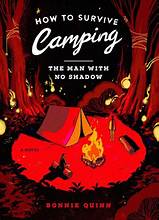
Here are a few examples of what a sort-of-psychopath can bring to a story:
Dramatic Moments
Protagonists come up against all kinds of problems. In How to Survive Camping, Kate, who has inherited the management of a very haunted camp, deals with the anger of supernatural beings when visiting campers break the beings’ rules. Kate wants her camp – which includes the people in it – to survive.
But when you’re not overly focused on the feelings of others and not prone to guilt, your solutions to problems can be a little more…creative. Kate is quick with solutions that would bring much pause and hand-wringing to most people, if they’d be willing to choose them at all. The things Kate does to appease the supernaturals are dramatic – and sometimes bloody! – and feel only more so because of her practicality and dry wit along the way.
(Accidental?) Heroism
All those things Kate is willing to do? They often do save the day at the campground. Or when they don’t save everyone, they certainly minimize the damage.
There can be an unflinching, undeterred quality that goes along with psychopathy; if that person has a goal, they’re less likely to be stopped by fear.
Kate wants to keep her camp, and she wants her shrinking family circle to survive. She does some pretty brave things to go for what she wants. But her internal monologue is fairly free of any sense of guilt, regret, or musings about the experiences or desires of others.
Intrigue
Since a sort-of-psychopath’s motivations and behaviors skew to the side of many of their peers, they’re more likely to get involved in situations that arouse head-scratching and suspicion. The townspeople certainly are suspicious of Kate.
This is a great foundation for mystery. Especially because you have a shot at cracking the code of the character’s behavior. And there is a code; the character’s behavior will make sense. It’s not random, or “crazy”. It’s goal-driven and logical, but because it doesn’t factor in much guilt or concern for others, it’s just going to look different than how your average citizen might act.

If you check the internet for anything related to fictional protagonists who are psychopaths, any guesses for what comes up? You may not bat an eye when the names Dexter, Joe Goldberg, and Amy Dunne come up first. But keep going, and you’ll read debates about whether and to what degree James Bond, Jack Reacher, and Lisbeth Salander fit the high-functioning mold. They are fictional characters, so it may not be wise to look for ironclad consistency, but it’s striking that there’s enough reason for debate.
And it’s all compelling enough to keep in mind when reading or writing characters who do skew to that side of the edge.




Leave a Reply