

Dr. Deadly’s latest read, Julie Clark’s The Ghostwriter, is all about questions. The main character, Olivia, delves into the unsolved mystery that shaped her entire world: did her father kill his brother and sister back when they were all teens? And did that ultimately drive Olivia’s mother away, and forge Olivia’s own life on the sidelines?
No answers/spoilers here, dear reader, in case you haven’t read the book yet. This post aims to share the vibe of the novel, as a recommendation, and to tickle the mind with what would I do in their shoes?
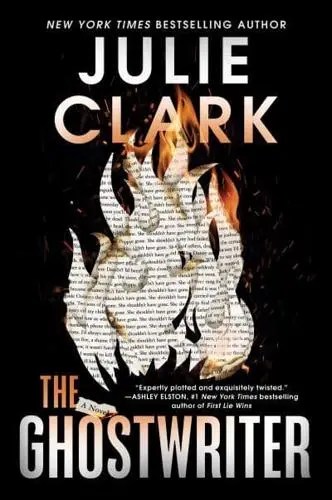
Olivia excavates layers of secrets and lies throughout the novel to get to the truth of the murders of her aunt and uncle. Some of these layers were constructed with arguably good intentions, and others with bad ones. But in the end, they all quashed the life Olivia – and a few other characters in the book – could have had, and may have preferred.
Readers may find themselves imagining taking other directions at so many of the forks in the road going back through Olivia’s life and the lives of her parents and their families. Forks where, in The Ghostwriter, secrets and lies were the go-to solutions. Where people tried to get away with things, usually out of desperation.
Secrets and lies. Take a moment and think of any you’ve ever created, large or small, to protect yourself or someone else from an unpleasant situation. We know behavior is more often driven by what is happening or could happen right now than what might possibly occur down the road. This affects our judgment, especially when we’re stressed or scared, and that emotion competes with big-picture logic.
If you could go back in time, would you handle those situations differently? And why, or why not? Has life taught you that the truth will out, or that the truth will set you free? Or something more complicated?
When we read crime fiction novels, we expect transgressions and subsequent, panic-driven coverups. It’s all part of the drama we seek in safely printed form. But, aside from vicarious suspense, The Ghostwriter gives us the opportunity to notice a tragic irony, a sort of Murphy’s Law: the secrets and lies that are meant to protect people can lead to the worst disasters.

There’s an absorbing moral complexity to The Ghostwriter, as the strengths and hypocrisies of each character are on full display. Olivia rejects her family’s secrets but keeps so many of her own. Her father has a history of seeming to both protect and endanger her. And the ghosts of his family are all inconsistent, showing love and vindictiveness, honor and deceit.
The psychological drama of The Ghostwriter goes beyond can they get away with it? It enters the infinitely more-dimensional space of: does getting away with it mean you’re really free? By the time the truths are all revealed, it’s hard not to have sympathy for most of the characters, despite their many flaws.
If this kind of reflection tickles your brain, The Ghostwriter may be a great choice for your TBR.





Leave a Reply