

Happy Fourth of July, dear readers!
Last night Dr. Deadly finished reading Lauren Nossett’s The Resemblance. Set in a Georgia university campus town, the story centers on the hit-and-run killing of a college student in a fraternity with more to hide than a secret handshake.
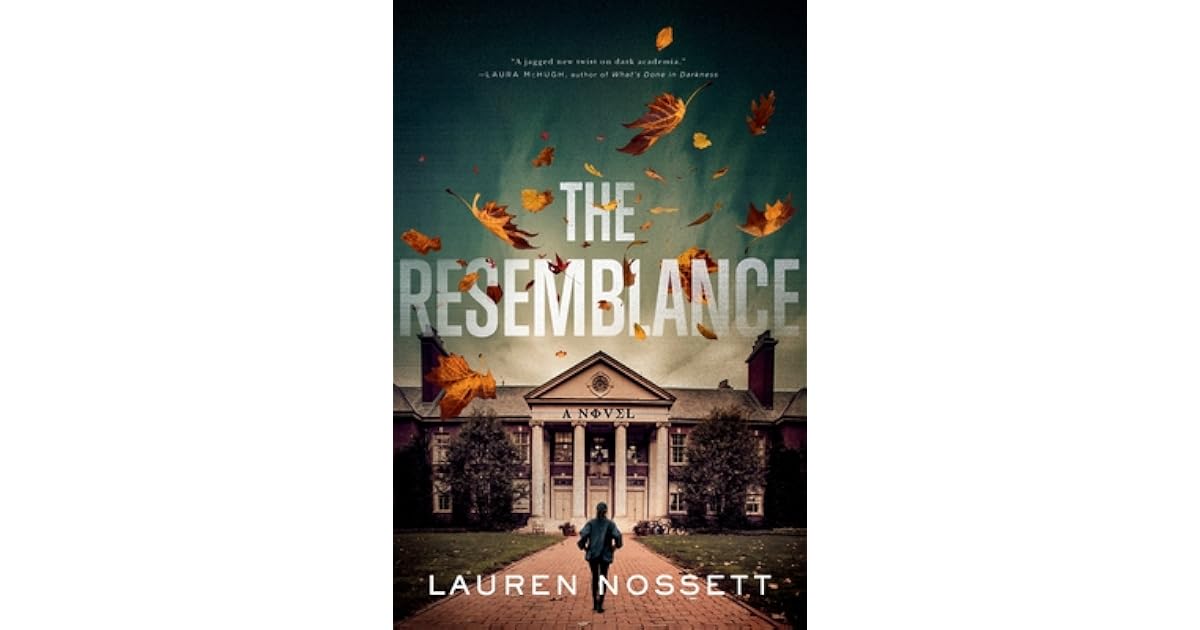
The story is told from the point of view of Marlitt Kaplan, a detective who leans into strong feelings, particularly animosity. A lot happens to Detective Kaplan during the book…and as it moves forward we also, little by little, go backward in time, learning more about earlier life experiences that haunt her.
Nossett’s first novel (she is now releasing her third, Indie Darling) earned a lot of positive reviews, alongside some debate. One point of discussion involves Kaplan’s behavior. Some reviewers call her reactions to situations extreme. This drew Dr. Deadly’s thoughts to the impact of trauma, and how a novelist can depict someone suffering its effects.
A common vision of PTSD might go something like this: A 5-year-old child is bitten by a Doberman, and it’s a terrifying and painful experience. She grows into a woman who can’t go near even her neighbor’s four-pound Pomeranian, and she has occasional flashbacks and nightmares about the childhood bite.


Now consider this scene from the book. Kaplan risks her career to enter the fraternity house when she shouldn’t, acting on her conviction that she’ll find evidence of a crime, though there’s no clear case for that certainty. Dr. Deadly understands how Kaplan’s actions can be viewed as overly dramatic.
Dramatic behavior, though, can be an outward signature of internal trauma. It’s not a real spoiler to share that, during college, something bad happened to Kaplan’s best friend. Later in the book we learn other hard details of Kaplan’s history. As the layers of her experiences are revealed, her overreactions might be reframed using a trauma-related term: hypervigilance.
Hypervigilance can be described as extreme or even excessive alertness, usually to potential signs of trouble or danger. Now consider hypervigilance as a falling domino that triggers a progression: from hyper-focus on a four-pound dog, to noticing he just bared his teeth the slightest bit, and his posture shifted so he may be about to jump from his human’s lap, and if he does come this way, waitstaff holding dinner trays are blocking the only exit, but dogs smell fear and run fast and I have to get out of here now because I can’t get bitten again.
Can you picture what happens next?
Hypervigilance can lead to expecting the worst, and then acting as though the worst must be true. And, unlike in the four-pound dog example above, it won’t always look like a clear line from bad-experience-with-ABC to fear-of-ABC.
That guy who loses his temper in meetings? He could be trying to dominate everyone for the heck of it. But maybe he had a father who ridiculed him, and he learned to fight back hard at the first sign of offense. Your friend who cancels a night out when there’s a change to the plan? She could be looking for excuses because she’s sleepy and antisocial. But maybe she grew up with a seriously ill family member, and had so little control over things that now her nervous system boils over when plans are up in the air.
Think about the potential for portraying trauma, not just drama, in the interactions between characters in a novel. To be clear, drama isn’t bad, or even lesser-than: it’s necessary to propel action forward, and can be riveting for the reader, when the factors driving a scene are all present, front and center. But awareness of the depth and dimension that well-portrayed trauma adds to a novel is a separate asset. For readers and writers alike, that awareness can intensify the power of the story.

Dear reader, can you think of any novel characters whose actions – and seeming overreactions – make more sense once you learn about painful events from their past? Any that particularly moved you? Express yourself below!






Leave a Reply