

Last night, Dr. Deadly was in the mood to watch a show. A crime drama, of course. A search for something unseen produced the 2024 debut of High Potential, based on the Franco-Belgian series Haut potentiel intellectuel.
Well. In the first episode, Dr. Deadly was hooked. And then reflected on why, to share this recommendation.
Here’s the premise: A single mom with a sky-high IQ and trouble keeping a job cleans offices at the LAPD, until her brilliance is discovered and leads her to work with a straight-laced Major Crimes detective. She’s Sherlock-Holmes-brilliant, saying things like Frank is the killer, because the death threat was written by a left-handed person, and an ink smear matches the tiny streak I noticed on Frank’s left shirt cuff last Tuesday.

In addition to Morgan (the mom), there are a few other highlighted characters, including Detective Karadec and Lieutenant Soto at LAPD and Ava, Morgan’s 15 year-old daughter, whose father has been missing for years. The show succeeds at two oft-mentioned rules of storytelling: every character a) wants something, and b) grapples with conflict.
Desire and conflict. From the first episode, they are tangible not only for Morgan, but for each of the major characters. Still, the math felt wrong; the two variables didn’t add up to the full appeal of the show, and the pull Dr. Deadly felt to keep watching.
The problem roused Dr. Deadly’s analytical tendencies. Memories of scenes yielded a pattern, a third variable that makes High Potential compelling: vulnerability. Through facial expressions, words, and actions, each character shows unguarded unhappiness or worry: moments of call-and-response when the audience feels empathy for the person on the screen.

In one scene, there is a conflict between Detective Karadac and Lieutenant Soto, who wants Karadac to take Morgan on as a consulting partner in solving a homicide. They both want to solve the case, but Karadac thinks Morgan is a loose cannon who could cause more harm than good. Each wants something: check. There’s heat to their conflict: check.
And there’s a vulnerability each of these law enforcers shows while going for what they want. It shows in the way Karadac pleads his case, and in the look on Lieutenant Soto’s face as she watches Morgan walk away. The vulnerabilities are strong enough to stir that engaging empathy, but – at least to Dr. Deadly’s theatrical tastes – not drawn out to the point of sappiness or bad drama.
Now, consider novels through the lens of this trifecta. Dr. Deadly’s current read is Eva Björg Ægisdóttir’s You Can’t See Me, featuring a prominent Icelandic family’s reunion in a remote upscale hotel, the perfect place for secrets and lies to push someone over the edge to murder.
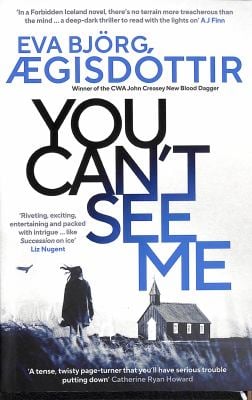
The novel is told from the viewpoint of three characters: a mother and a daughter in the extended family tree, and a hotel employee with a mystery of her own.
Desire. Conflict. Vulnerability. There is a slow but relentless burn to You Can’t See Me; with each storytelling turn, the three characters reveal more about what drives them and what haunts them – what they desire, and the conflicts that get in their way. As for vulnerability…
Dr. Deadly is curious about how vulnerability is conveyed in novels versus on screen. One typical difference between the two storytelling mediums is the novel’s open portal to characters’ thoughts. Like so many things in life, you can point to the pros and cons.
Being in someone else’s mind creates a deep connection. At the same time, a transcript of detailed thought risks sounding self-absorbed and self-indulgent. Highlighting vulnerability in those thoughts could make a woe-is-me echo chamber if not done skillfully, vs. the empathy easily sparked by a moment of worry and sadness in Morgan’s eyes as she looks at her daughter.
In You Can’t See Me, the thoughts of the mother and daughter came close to Dr. Deadly’s woe-is-me line…and then, with delicious skill, details dropped that shifted Dr. Deadly’s view of those characters, revealing them to have histories and personalities more complex than they’d seemed. Dr. Deadly stayed hooked!

What about the novels and shows in your life? How do the characters’ desires, conflicts, and vulnerabilities affect your attachment to them? And do any other elements of the story hook you, and keep you reading or watching? Dr. Deadly cares to know, so speak up, share it below!




Leave a Reply