

I was horrified. Probably because I was with a coworker, not a client I was ready to try to help.
“I told her pediatrician, I don’t connect with her like I do with my other children. I just don’t feel close to her.” I was a brand-new therapist, and my clinic’s office manager recounted an appointment with her seven-year-old’s doctor.
I nodded sympathetically. Then I did a double-take. “Wait. Your daughter was in the room with you?”
“Yes.” Her answer was calm, matter-of-fact. I imagined the scarring on this little girl’s soul.
“Oh,” was all I could think to say at the time.

Goodness of fit. It’s a term psychiatrists Alexander Thomas and Stella Chess – who were also married and parents of four children – coined through their groundbreaking research about children and parents. They upended the idea that a child’s behavioral and emotional problems were the singular product of bad parenting. (By the mother, of course!)
Instead, they found children are born with their own temperament, which then interacts with how the parent approaches them…and that’s where things can go off the rails. If a parent doesn’t recognize the child’s temperament and work with them accordingly – if they try to jam a round peg of a high-energy child into a square hole of quiet activity for the whole weekend, for example – they’re increasing the likelihood of a frustrated, alienated, acting-out child. This doesn’t mean parents should twist like pretzels to cater fully to the child’s preferences! Like with most things, extremism is unhealthy, but some empathic compromise goes a long way.
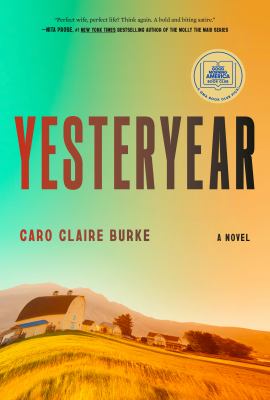
I finally read Yesteryear. It made me focus on the wiring between parents and children, and how reactive most people are to that circuitry, and what an opportunity that is for books to move readers. This stood out for me especially in Yesteryear, because Natalie’s emotional range was so limited and shallow that I could have in turn felt little for her at all.
But. There were moments in the book that jolted me, an activation of that parent-child circuitry. Consider the plea Natalie recalls a few times throughout the novel: why can’t you be nice, Natalie? If it were one of the “angry women” saying this, or the poor fan Natalie offends at the supermarket, the line would have held interest, but nothing like the emotional jerk of hearing it from Natalie’s own mother. The imagery was instant: the two-way confusion of a mother and daughter with a gulf of misunderstanding between them.

I think Natalie and her mother would rate poorly on goodness of fit. If Natalie’s mother had clocked her daughter’s negative outlook, her lack of empathy, her poor social skills, and understood that this was tied to Natalie’s temperament, and if she’d had the skills herself to do this, she might have helped Natalie understand herself better and more kindly in relation to others, and set her up for a better shot at wanting to – and being able to – have healthier relationships. Maybe not totally healthy, but healthier enough to make a difference.
Now, novels are meant to be dramatic, so we may not want fictional Natalie to be healthier. But authors and readers alike benefit from the awareness of the role familial goodness of fit can play in raising emotional stakes. I’m glad Burke had why can’t you be nice, Natalie come from Natalie’s own mother. It made me feel more for both characters, and therefore more for the story.
The poorness of fit between Caleb and his father also silently shape the trajectory of the novel. Can you imagine if the senator had stepped back, really seen his son, and thought, he might just make an excellent kindergarten teacher. Again, this might have led Caleb down a road that would have made for a well-adjusted, boring character in a novel! But so much more powerful that Caleb’s own father, who was connected to him by an extra-thick cord, was the one who mismanaged knowledge of his own son’s temperament.
Parent-child relations may not be the first element writers and readers think of for driving tension in a novel. But Yesteryear made me think about it. I hope, dear reader, you’ll find it useful too.




Leave a Reply